
The First Jewish Revolt: Who were…the Sicarii?

One of the most infamous rebel groups active both before and during the First Jewish Revolt were a mysterious group known as the Sicarii. The Sicarii, named after the curved daggers they carried, were one of the earliest organised groups of assassins. However, very little is known about them as they only appear in one historical source, Josephus’ “Jewish War”. We do not know anything about their motives, objectives or allegiances. Prior to the revolt Josephus reports that they were particularly active in Jerusalem, assassinating a high priest. Consequently, historians suspect that the Sicarii had links to the one or more of the zealot sects, although which one and what the nature of the relationship was can only be guessed at.
During the First Jewish War the Sicarii captured the fortress-palace of Masada by storm, slaughtering its garrison. They were then reportedly involved in the 67/68 Zealot coup in Jerusalem which overthrew the moderate rebel faction (led by the traditional Judaean elite), the zealots subsequently installing a much more extreme faction in their place dominated by the zealots. Following their coup the Sicarii and Zealot factions engaged in an orgy of destruction, killing hundreds of moderate rebels. Subsequently the Sicarii split, some joining the rebels in Jerusalem, whilst others left the city (disturbed by their comrades murderous impulses). Eventually this latter group came to occupy the fortress-palace of Masada. Following a siege, this group allegedly committed mass murder-suicide, an act that later formed the basis of the “Masada Myth”*.

In today’s parlance the Sicarii would be classified as religious extremists, albeit trying to apply this identity to peoples in the ancient world is anachronistic and misleading. Their role in modern Israeli history is now seen as controversial as various Jewish militant/ terrorist groups came to name themselves after them. They also formed the basis of the Masada myth that helped define Israel’s early perception of itself as a nation after 1945. However, by the 1990s the myth has become less prominent due to its association with right-wing nationalism and ideals of self-destruction.
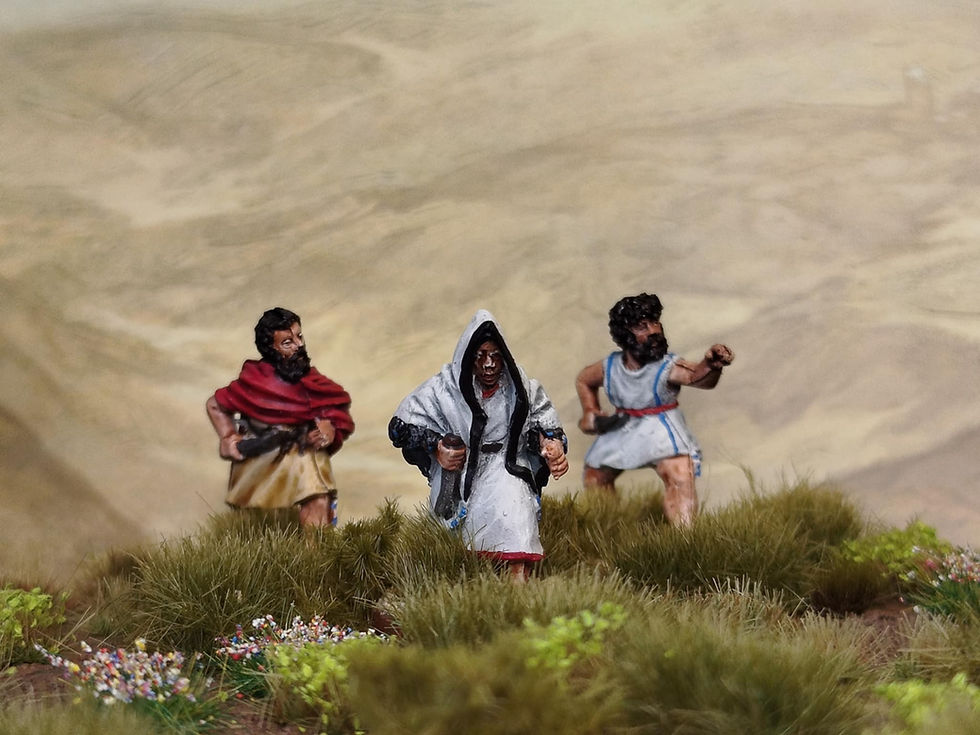
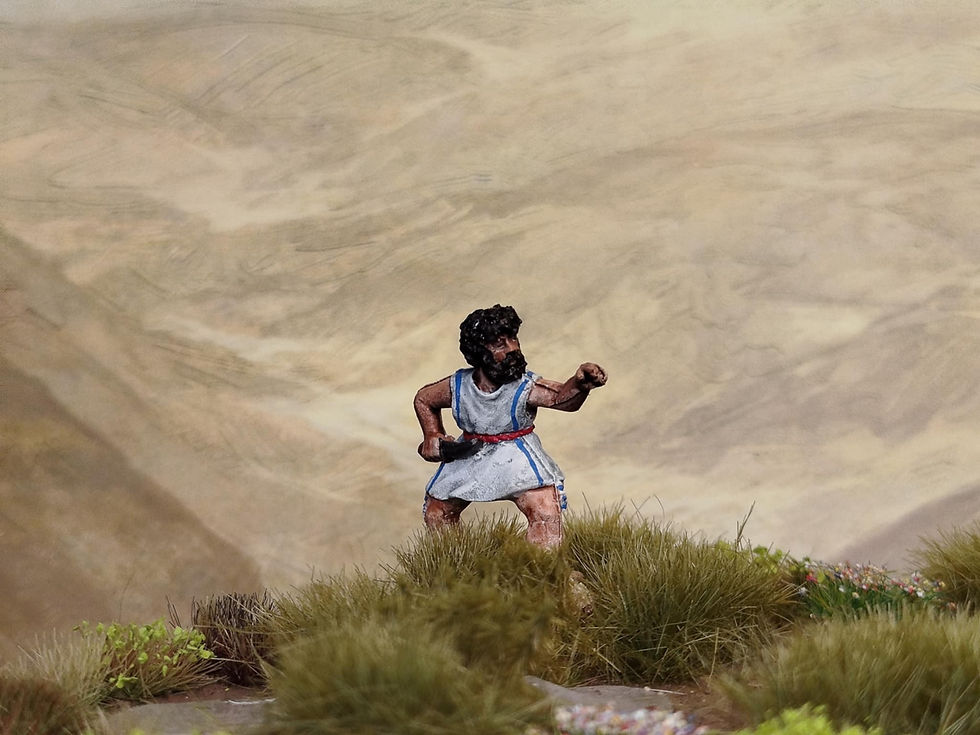
Whoever the Sicarii of the First Jewish War were, they nonetheless remain a fascinatingly enigmatic group. Unscrupulous in their methods, they ultimately came to define the conflict and have played a significant part in the development of the nation of Israel. Pictured are three Sicarii sculpted by Alan Marsh that we sell. These are designed to represent these mysterious assassins, being portrayed in simple clothing that would allow them to blend into the crowds before striking their target. Each has the dagger with which they are synonymous. One is depicted with a prayer shawl, and another with tzitzit, outward symbols of their faith.
*The Masada Myth alleges that the Sicarii held out against the Roman besiegers of their fortress for several years before committing murder-suicide to avoid enslavement. This story is based on Josephus’ account of the siege in his Jewish War. However, recent studies of the site using a variety of modern tools and techniques suggest that the siege likely lasted only weeks, ending quickly once the Romans had built their siege ramp. Archaeologists also speculate that the fighting continued once the Romans had broken into the fortress, the survivors making a last stand in one of Herod’s palaces against which a possible smaller siege ramp has been found. No evidence has ever been found to substantiate Josephus’ claims (themselves second-hand as he was not present) of a mass murder-suicide plot.

Comments